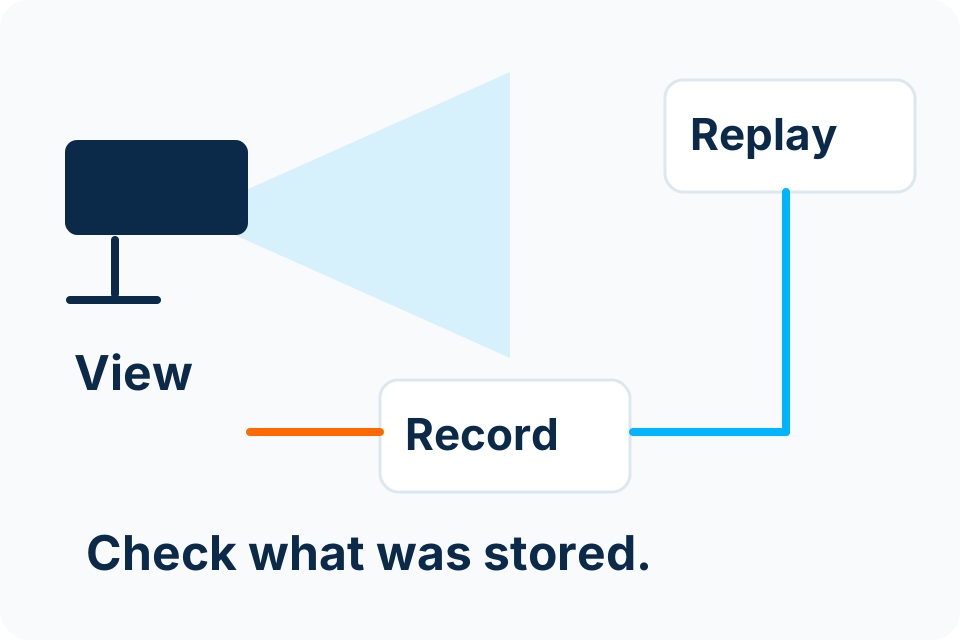
A live CCTV image proves only that a view is available at that moment. A useful recording check must show that the right camera’s footage can be found, played and exported by an authorised person.
Remote CCTV access is an account and network decision. The owner should know who can view footage, which service provides the connection and how access is removed when circumstances change.
CCTV storage depends on the recorded bitrate and duration, not only the camera count. Use a calculation to estimate capacity, then verify actual recording behaviour and usable retention in the installed system.
Prepare a CCTV survey by defining what each view needs to show. Camera quantity follows the purpose, site conditions and evidence requirement; it should not be the first and only decision.
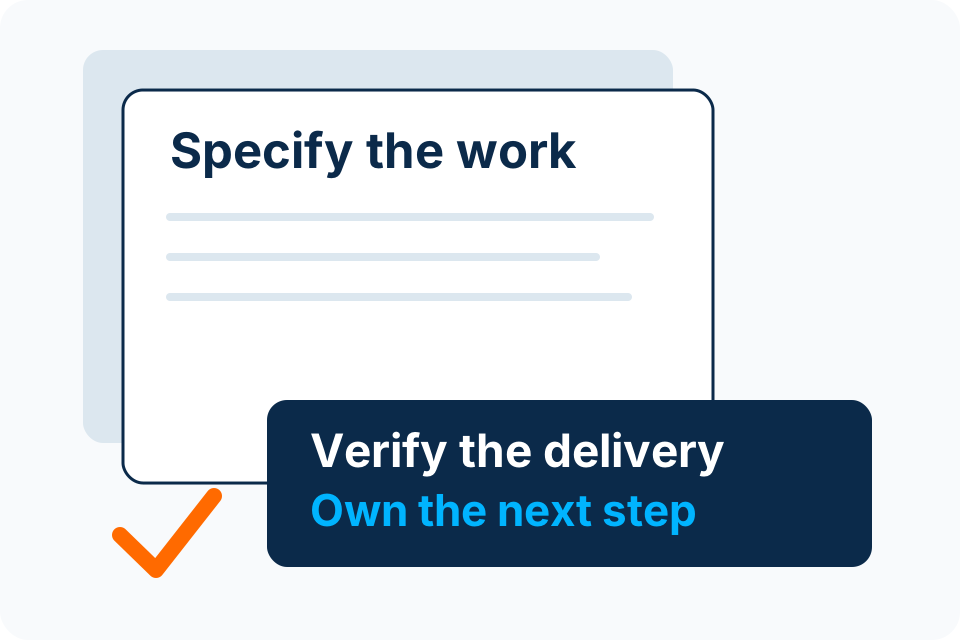
Verify equipment against the approved quotation before treating delivery as complete. Keep identity, condition and any unresolved difference in a simple receiving record.
An equipment quotation should identify exactly what will arrive, its condition and the work included. Resolve ambiguous substitutions and support terms before approving the order.
Compare equipment cost over an explicit useful period and scope. Purchase price is one input; deployment, support, accessories and eventual replacement can change the practical decision.
Verify recovered files by whether the important information opens and supports the required work. A folder list or large file count is not enough to establish a useful recovery.
Encrypted storage needs the appropriate authorised recovery material as well as readable data. A working drive or recovered file image does not automatically provide access to encrypted contents.
Backup, synchronisation and data recovery solve different problems. Know which copy is independent, which changes propagate and what you would actually restore after a mistake or device failure.