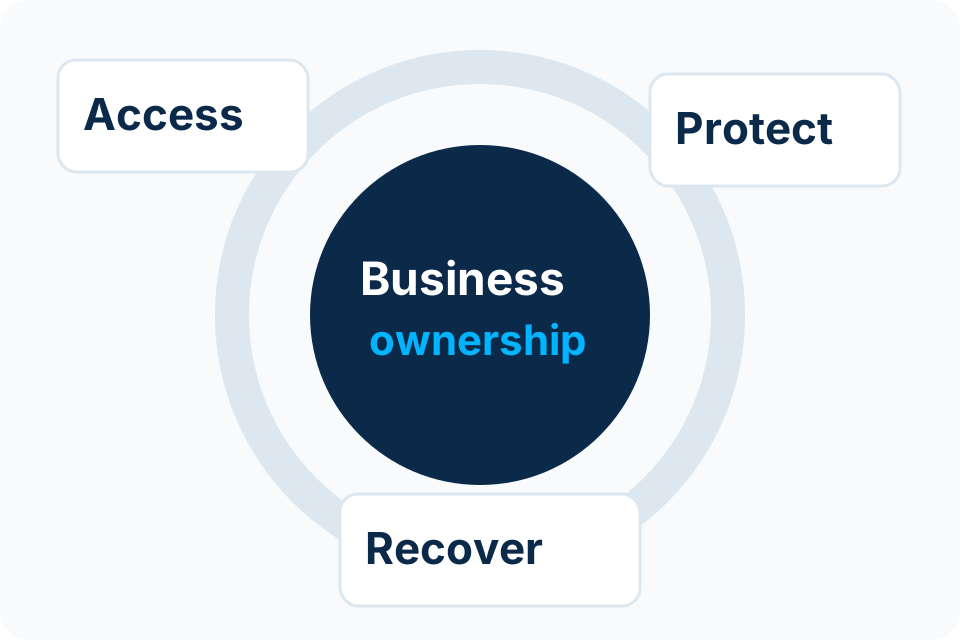
Your personal email often helps recover other accounts. Protect that recovery route and keep a usable way to regain access if your usual phone or sign-in method is lost.
Choose a password manager by how your team will own, recover and share access. A secure-looking application can still be poorly operated if its only administrator leaves or recovery is misunderstood.
Prepare the first-hour contact and authority plan before an incident. The goal is to know who can decide, how they can be reached and which qualified help is available when normal systems may be unreliable.
Compare managed security providers by the work they are accountable for. A long product list is less useful than a precise description of coverage, decisions, response and reporting.
Build a cybersecurity budget from known gaps and the people needed to operate the controls. Buying several tools without ownership can leave the same business risks unresolved.
Office network security starts with knowing what is connected and who administers it. A strong Wi-Fi password is useful, but it does not answer questions about guest access, remote management or unsupported equipment.
Prioritise patching with exposure, known exploitation and business consequence in view. A long list sorted only by a severity number is not a complete maintenance plan.
An endpoint alert needs an owner, an authorised action and a record of the result. Installing protection software does not by itself establish who will investigate or respond.
SPF, DKIM and DMARC help receiving systems evaluate email-domain authenticity. They are useful controls, but they do not prove that a message’s business instruction is legitimate.
Compare new and refurbished computers by the uncertainty you are willing to accept. Condition, battery health, warranty and specification consistency matter alongside the purchase price.