
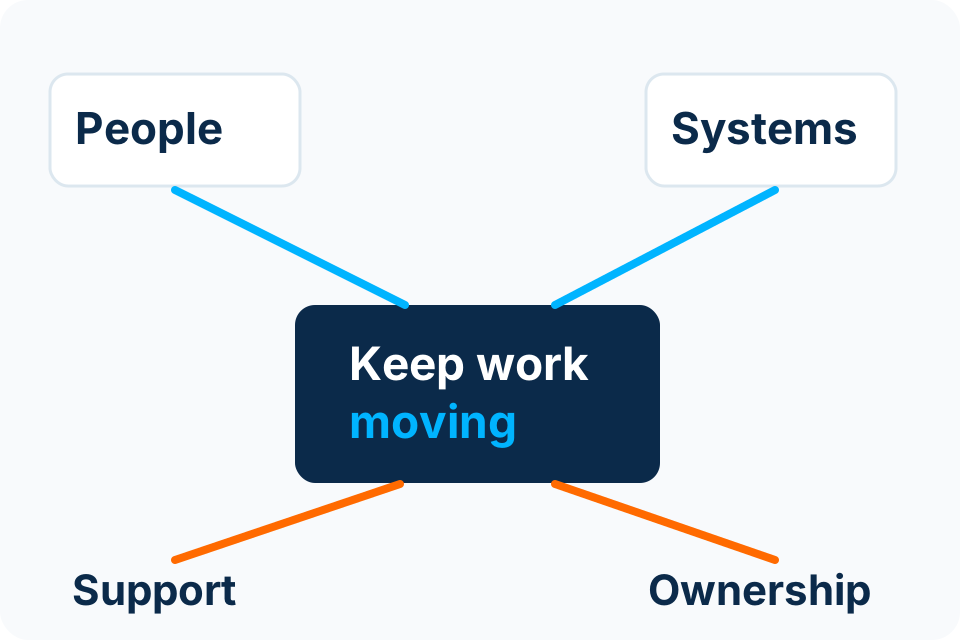
A managed IT agreement should say which people and systems are supported, how requests are handled and what work needs separate approval. “Unlimited support” is not a complete scope.
Define the environment being supported
List users, devices, sites, applications and network equipment. Identify customer-owned, supplier-managed and personally owned equipment separately. A support provider cannot responsibly promise the same access or action on every device that connects to the office.
Keep the inventory current as the business changes. Agree how new starters, purchased equipment and new applications enter the supported scope. Otherwise the agreement may describe an environment that no longer exists.
Use a scope schedule
| Area | Decision to record |
|---|---|
| Channels | How an issue is submitted and how its reference is tracked. |
| Hours | Human coverage and any separately contracted arrangements. |
| Priority | How business impact influences the agreed handling process. |
| Remote and onsite work | What is included and what requires scheduling or a quote. |
| Maintenance | Specific review or update activities and their evidence. |
| Projects | Migrations, major upgrades and other separately approved work. |
| Suppliers | Who coordinates external providers and who holds their contracts. |
Distinguish response from resolution
Acknowledging a request, beginning investigation and restoring service are different events. Ask which commitments the agreement actually makes and how dependencies are treated. A fault requiring a third-party part or provider decision cannot be understood from a generic response-time label.
Do not invent a target to make a proposal look attractive. The service needs staffing, access and an escalation arrangement that can support its commitments. Foxbyte’s published hours do not imply an unstated round-the-clock human service.
Record the customer’s part
The business usually needs to provide authorised contacts, timely staff changes, suitable access and approval for disruptive actions. It also retains decisions about budget, acceptable downtime and the importance of particular operations.
Agree how unresolved decisions are escalated. A request should not remain indefinitely “waiting for customer” without a clear question and responsible person. Likewise, technical staff should not assume authority for a purchase or change merely because an issue is urgent.
Check the handover and exit
- Who owns administrator accounts, licences and configuration records?
- What inventory and operating notes will be available?
- How are open issues and scheduled work transferred?
- How is provider access removed or changed?
- Which data handling and return terms apply?
A useful agreement supports everyday work and a controlled end to the relationship. Ask for a scope you can review line by line before comparing monthly prices.
Put the decision into practice
Share the users, sites and systems that need recurring support, along with the current coverage gap.
Explore Managed IT Services Discuss the requirement by email